
When Korea’s occupation ended in 1945, martial arts schools called kwans began to open, and by the mid-1950s there were nine original kwans. Their leaders met to unify their teaching, and from the Kukkiwon’s point of view taekwondo grew out of that joint effort, with no single creator.
Resources
History of taekwondo.
Taekwondo means “the way of the foot and fist.” This is the story as told from the Kukkiwon and the Jidokwan, the traditions we belong to, through to the Olympic sport run by World Taekwondo.
Kukkiwon
The Kukkiwon in Seoul is the central institution and highest technical authority of taekwondo. It began as the Korea Taekwondo Association’s central training hall and took the name Kukkiwon, “national academy,” on February 6, 1973. Today it trains and certifies instructors and manages and recognizes Dan ranks, which is why a Kukkiwon Dan certificate is recognized around the world. It is also known as World Taekwondo Headquarters, and it houses the World Taekwondo Academy.
The Kukkiwon has kept a permanent demonstration team since 1974, and it works with World Taekwondo to promote sparring competition at international and Olympic levels.

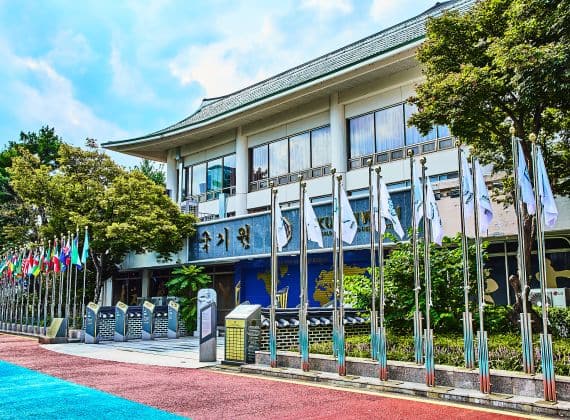
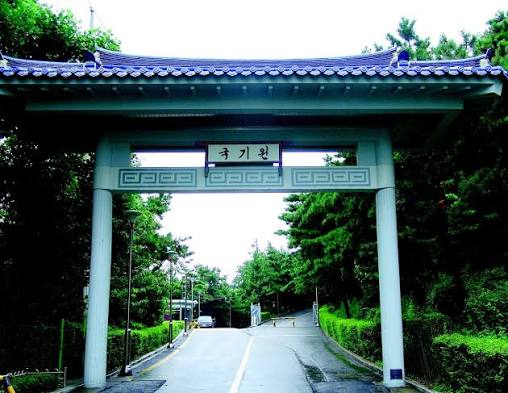
Jidokwan
The Jidokwan is one of the original nine kwans. It traces back to the Chosun Yun Moo Kwan, founded at the end of World War II. Chun Sang Sup, who had studied Shotokan karate in Japan, laid its foundations, and Dr. Yun Kwae-byung was voted its first headmaster. After the Korean War it restarted as Ji Do Kwan. Ji means wisdom, do means way, and kwan means school or hall, so the name is often translated “School of Wisdom.”
The Jidokwan adopted the Kukkiwon system in 1973 and endorses it today. Its 60th anniversary handbook, published in 2006, sets out a philosophy built on self-perfection, public service, patriotism and discipline.
World Taekwondo and the sport
World Taekwondo (WT), founded as the World Taekwondo Federation on May 28, 1973, at the Kukkiwon, governs taekwondo as a sport. Its competitions include sparring, poomsae (forms) and para taekwondo, and it counts 215 national member associations across five continental unions. It is headquartered in Seoul, and Chungwon Choue has been president since 2004.
In sparring, athletes wear electronic protectors and scoring is automatic. A chest kick scores 2 points and a head kick 3. Turning kicks score more: 4 points to the chest and 6 to the head, which was 5 before 2026. A punch to the chest scores 1.

Timeline
1945
Korea’s occupation ends and martial arts schools called kwans begin opening. By the mid-1950s there are nine original kwans, including the Jidokwan.
1955
Leaders of the kwans begin meeting to unify their styles, and the name taekwondo comes out of that effort. The Kukkiwon and World Taekwondo describe it as a collaboration among the nine kwans.
1972–1973
The Kukkiwon, built as the Korea Taekwondo Association’s central training hall in Seoul, is renamed Kukkiwon on February 6, 1973. The Jidokwan adopts the Kukkiwon system the same year.
May 1973
The Kukkiwon hosts the first World Taekwondo Championships, with 200 athletes from 17 countries. On May 28, the World Taekwondo Federation is founded there by 35 representatives.
1974
The Kukkiwon forms its permanent demonstration team.
1977
The nine largest kwans, the Jidokwan among them, recognize the Kukkiwon as the sole black belt promotion body.
1980
The International Olympic Committee recognizes the World Taekwondo Federation (July 17).
1988 and 1992
Taekwondo is a demonstration sport at the Seoul and Barcelona Olympic Games.
2000
Taekwondo is an official Olympic medal sport at the Sydney Games, adopted in 1994.
2009
A Jidokwan leader is elected president of the Kukkiwon.
2013
The International Paralympic Committee recognizes World Taekwondo (October 16). Para taekwondo debuts at the Tokyo Paralympics.
2017
The World Taekwondo Federation becomes World Taekwondo.